
Land Clearing & Site Prep
Full-Property Clearing & Site Prep for Building Pads & Pastureland
From building pads to pastureland, our heavy equipment handles full property clearing with precision — and we don't stop at clearing. Site prep bridges the gap between raw, wooded property and a build-ready pad: grading, drainage control, and soil stabilization on top of removing the trees, brush, and stumps in the way. We clear efficiently while being mindful of grading, drainage, and the trees you want to keep — protecting your topsoil and keeping erosion in check, so your land stays healthy and ready to use. Careful grading and drainage control also protects against the erosion and runoff issues common during heavy rain events, from Huntsville in Walker County to Coldspring in San Jacinto County and Columbus in Colorado County.
What's the difference between land clearing and site prep?
Land clearing is the first step — removing trees, brush, stumps, and other surface obstacles from the property. Site prep is the fuller process that follows: grading, drainage installation, soil stabilization, and utility trenching to turn a cleared lot into an actual build-ready pad. We scope both separately so you're only paying for the site prep work your project actually needs.
What's included in site preparation work?
Site prep covers land clearing plus grading (rough and finish), soil compaction, drainage installation, and utility trenching where needed — everything that bridges the gap between a cleared lot and a pad ready for construction, a driveway, or a septic field.
Why does proper site prep matter before you build?
Skipping real site prep and building on ground that's just been cleared — not graded or drained — tends to show up later as pooling water near the foundation, an uneven pad, or a driveway that erodes after the first hard rain. Site prep exposes the property's real topography up front so those problems get solved before concrete goes down, not after.
Before & After
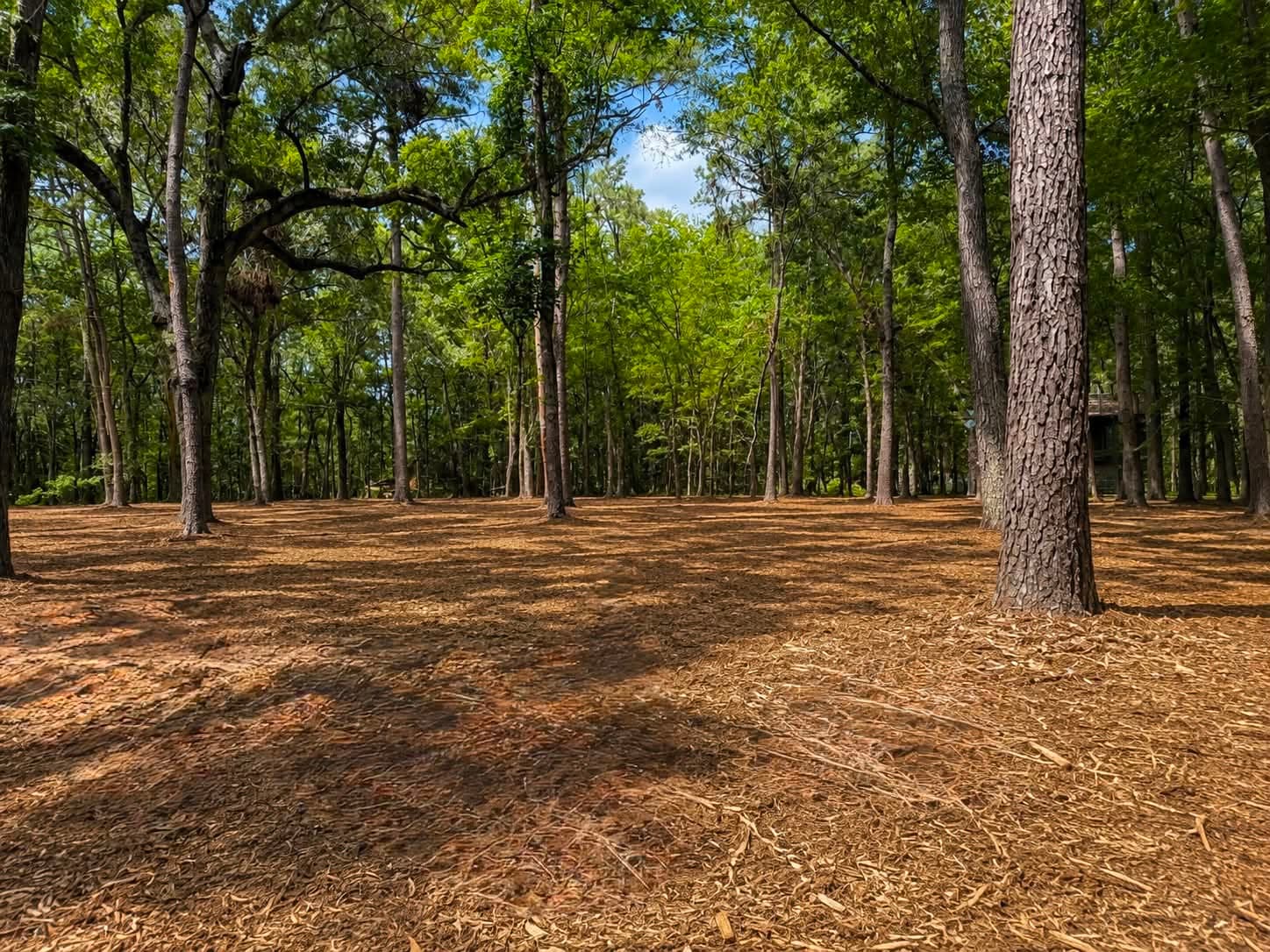 After
After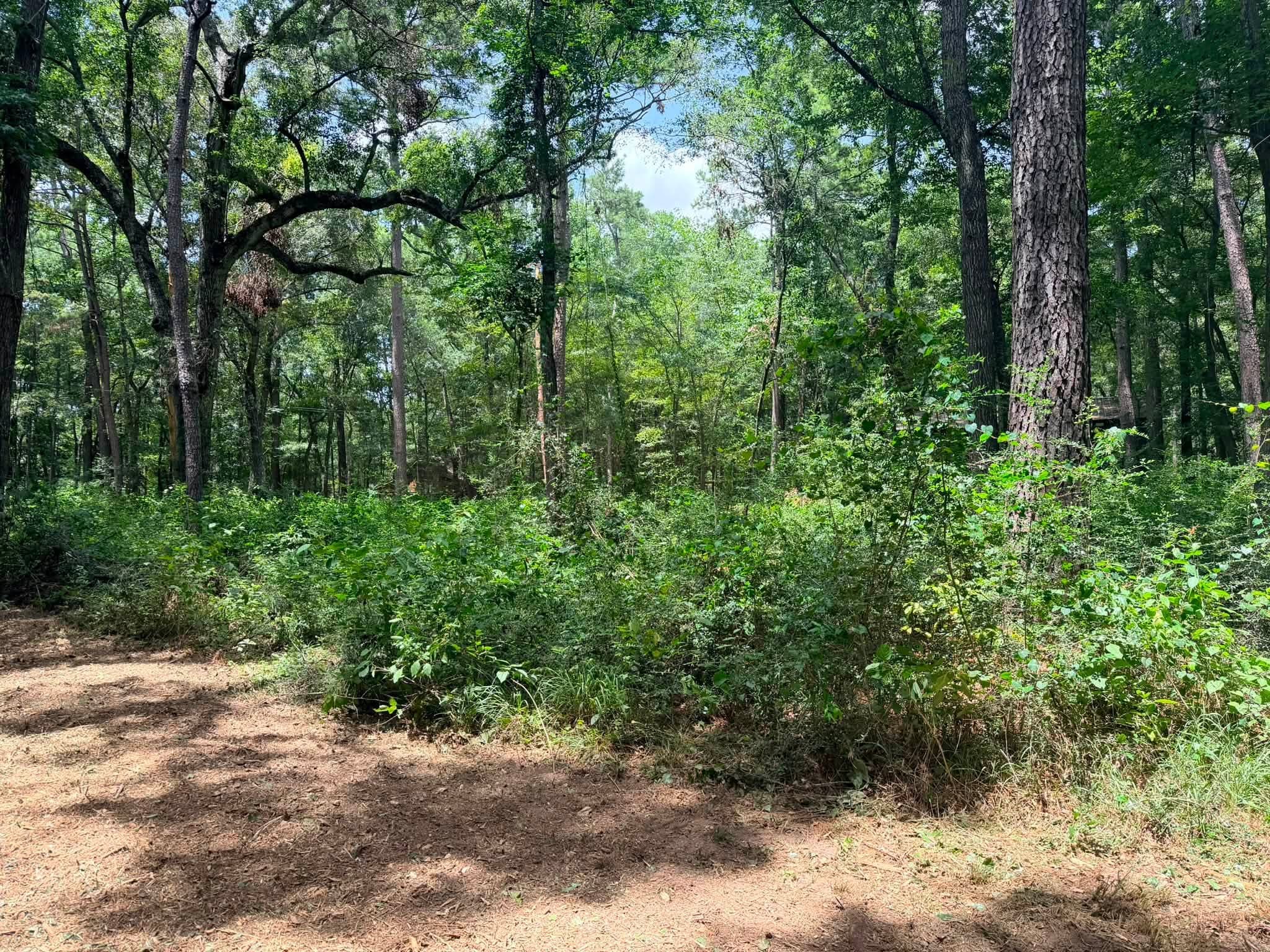 Before
★ Drag to See the Difference ★
Land Clearing & Site Prep FAQs
How do I know if my land needs site prep, not just clearing?
If you're planning home construction, a driveway, agricultural use, or a drainage fix, you likely need more than clearing alone. Signs the land needs site prep specifically include uneven elevation, pooling water after rain, or unstable/soft topsoil that won't support a foundation as-is.
What should I ask before hiring a land clearing company?
Confirm they're licensed and insured, ask whether the bid includes stump removal, haul-away, and mobilization, and whether they'll handle permitting and utility line marking (calling 811) before digging. Also ask which clearing method — forestry mulching versus dozer excavation — they'd recommend for your soil and terrain.
Do I need permits for land clearing?
Many jurisdictions require a tree removal, land disturbance, or erosion control permit — especially near wetlands, waterways, or steep slopes. Agricultural clearing sometimes qualifies for exemptions; we can help you figure out what applies to your property before work starts.
How long does land clearing take?
In workable conditions, a crew can typically clear a few acres per day on light-to-medium brush, slowing down considerably on dense, heavily wooded terrain. Total timeline depends on acreage, vegetation density, weather, and whether debris is mulched on-site or hauled off.
Do you clear land for both building pads and pastureland?
Yes. We handle full-property clearing for construction building pads as well as opening up pastureland for grazing or hay — both require the same attention to grading and drainage so the land stays usable and erosion-resistant afterward.
Can I keep specific trees during land clearing?
Yes — selective clearing is standard. We flag the shade or specimen trees you want to keep and work carefully around their root systems rather than clearing them along with everything else.
Do I have to clear my entire property, or can it be partial?
Partial clearing is common and often preferable. Many landowners only clear the home footprint, driveway, utility paths, and a defensible-space buffer, leaving the rest as a natural privacy or wildlife buffer.
What's the difference between rough land clearing and site grading?
Rough clearing removes surface vegetation, trees, brush, and stumps down to soil level. Grading is the step after that — reshaping, leveling, and compacting the dirt for a foundation, driveway, or proper water drainage.
Can land clearing help with drainage issues on my property?
Yes. Clearing combined with rough grading and slope correction redirects surface runoff away from structures, cuts down on standing water, and reduces erosion — all common issues on overgrown lots in this area given how much rain the region gets.
What should I check before buying raw or undeveloped land?
Zoning restrictions, wetland designations, flood risk, soil suitability for a septic system, topography and slope, road access, and how close utilities (water, power, sewer) actually run to the property — all of it affects what clearing and site prep will realistically cost and involve.
Can land clearing be done on a sloped property?
Yes, with the right equipment and care — tracked mulchers and specialized excavators can work steeper terrain that wheeled equipment can't. Sloped clearing needs extra attention to erosion control, sometimes including silt fencing or reseeding right after the work is done.
What's required to maintain cleared land long-term?
Planting native grass cover to crowd out weeds, treating any stump regrowth periodically, and brush-mowing pasture areas once or twice a year keeps cleared land from reverting back to thicket.
How much does land clearing or site prep cost?
Land clearing generally runs $1,500–$6,500 per acre depending on whether it's light brush, medium growth, or dense timber — for example, roughly $1,500–$2,500 per acre for light brush up to $4,500–$6,000+ per acre for dense timber, or $1,800–$4,000 per acre if mulching without haul-off. Hourly machine rates run $150–$300 per hour per machine, with a typical minimum job charge of $800–$1,500. Request a free quote for pricing based on your property's acreage and vegetation.
Gallery
Areas We Serve
From forestry mulching and land clearing to underbrush removal and right-of-way clearing, we serve property owners throughout the Greater Houston region — anywhere within roughly 100 miles of our home base in Cypress, TX. Tap a county below to see the towns we cover in it.
Montgomery County
- Magnolia
- Conroe
- Willis
- The Woodlands
- Montgomery
- New Waverly
Waller County
- Waller
- Prairie View
- Hempstead
Fort Bend County
- Rosenberg
- Fulshear
- Sugar Land
- Missouri City
Liberty County
- Cleveland
- Dayton
- Liberty
Chambers County
- Anahuac
Galveston County
- League City
- Texas City
Austin County
- Bellville
- Sealy
Washington County
- Brenham
- Burton
Grimes County
- Navasota
- Plantersville
- Bedias
San Jacinto County
- Coldspring
- Shepherd
Colorado County
- Columbus
- Weimar
Wharton County
- Wharton
- El Campo
Brazos County
- College Station
- Bryan
Fayette County
- La Grange
- Schulenburg
Walker County
- Huntsville
- New Waverly
Burleson County
- Caldwell
Madison County
- Madisonville
Polk County
- Livingston
Lavaca County
- Hallettsville
Lee County
- Giddings
Hardin County
- Kountze
- Silsbee
- Sour Lake
Matagorda County
- Bay City
Jackson County
- Edna
Trinity County
- Trinity
Robertson County
- Hearne
- Franklin
Jefferson County
Leon County
- Centerville
Milam County
- Cameron
Bastrop County
- Bastrop
Tyler County
- Woodville
Houston County
- Crockett